
01
Team-Based
The nation’s most popular team based pickleball format — level-matched amateur league play.
American Team Pickleball League
ATPL is the national home for team based pickleball — affiliate leagues, a proven match format, and a clear path to national championships.
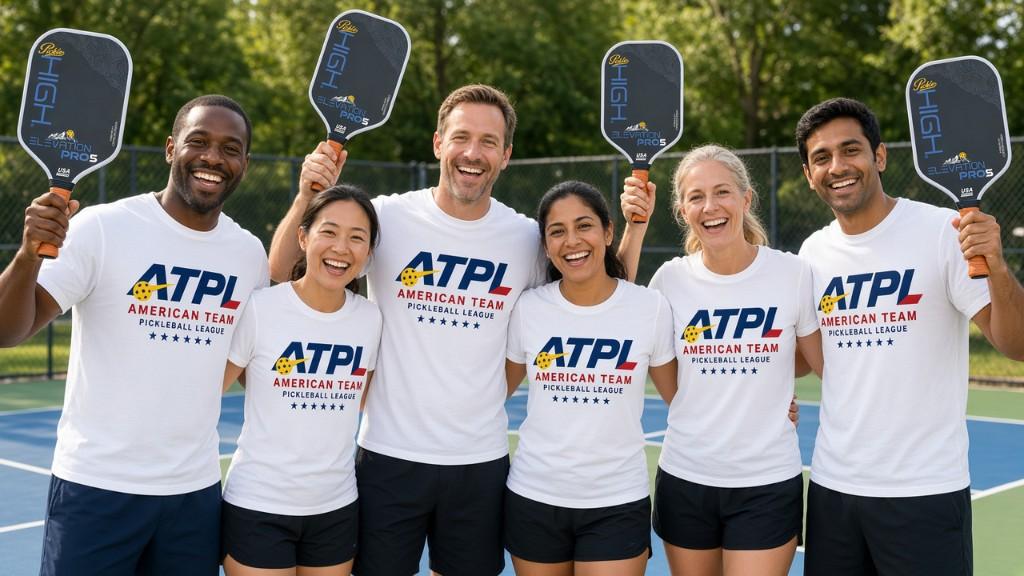
10,000+
Players in affiliate leagues
Team-Based
Play together. Belong to something.
Community-Driven
Meet new teams. Build lasting connections.
Nationally Connected
A clear path to national championships.
Next up · National Championships
November 5–8
Pictona at Holly Hill, Florida
State champions and qualifying teams compete for national titles in the same team format you play all season. Lodging blocks are open.
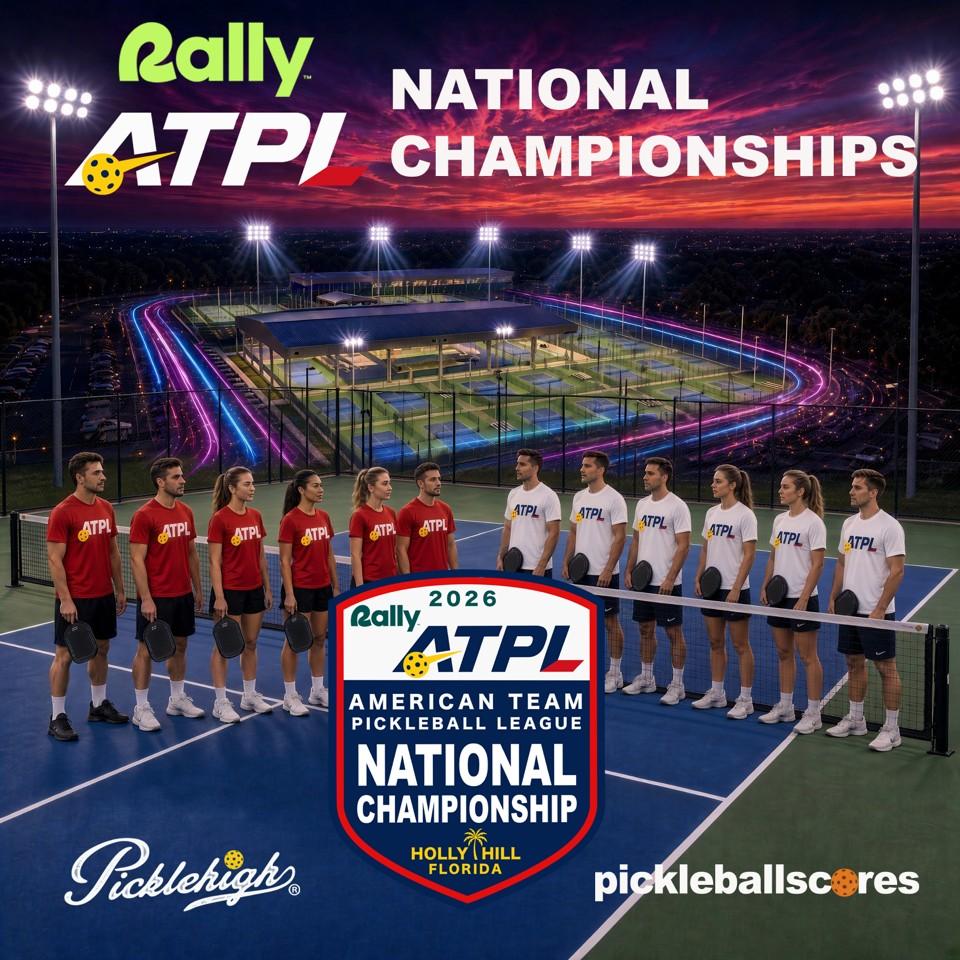
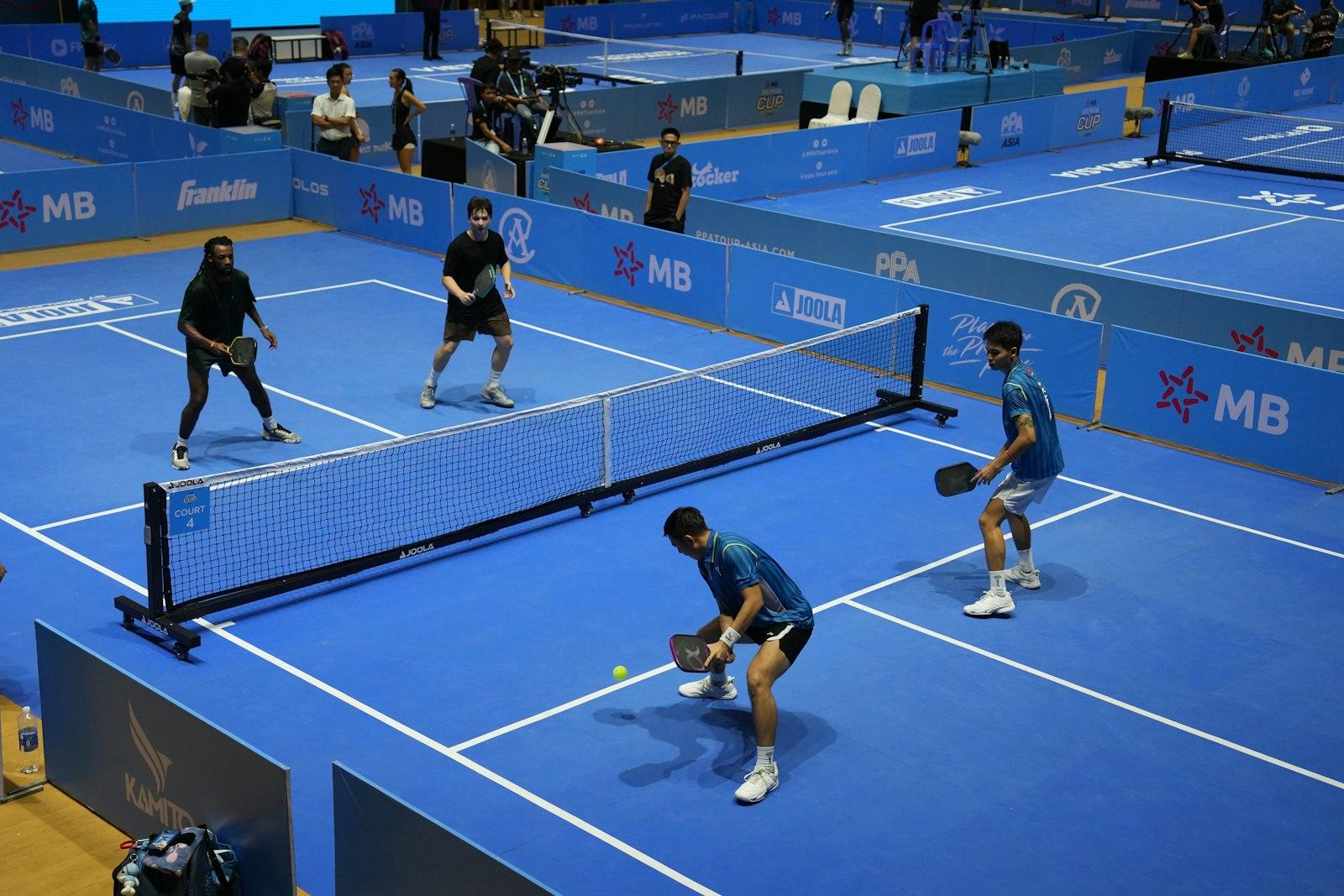
On the courts


Leagues starting up
Click a marker to open that league. Hover a region to highlight it.
Have a League?
Affiliate your leagueStart a team pickleball league?
QuickStart!Play in a League?
Find a League!
Why ATPL
Instead of individual open play, you roster a team and compete through a season of matches. Every game counts. Every player can swing a match.
01
The nation’s most popular team based pickleball format — level-matched amateur league play.
02
From local wins to national titles, teams reach new heights.
03
Bringing league champions together to meet, compete, and connect.
The format
Six players. Three doubles pairs. Three rounds. Two games to 11. Win a game, take 2 points. Score 6 or more, take 1. Highest team total wins the match.
“People like to be on teams. The ATPL format and scoring system is unique, exciting, and inclusive — where even the lowest-performing players can make a significant contribution.”
Questions
The American Team Pickleball League (ATPL) is a 501(c)3 national organization connecting locally operated team-based pickleball leagues under a common competitive format, rating system, and pathway to the ATPL National Championships.
ATPL is built around teams rather than individual players or fixed doubles partners. Players compete together over a league season, meet and play against other teams and players, and can advance from local competition to a national championship experience.
ATPL is primarily a league organization. Local leagues provide regular-season team competition, with qualifying teams having an opportunity to advance to the ATPL National Championships.
Generally, no. ATPL affiliates operate and manage their own local leagues while using the ATPL format, standards, rating methodology, and league-management platform.
Yes. ATPL is actively expanding into new markets and can work with individuals, clubs, facilities, or organizations interested in establishing team-based league play.
No. You can start a new league using the ATPL QuickStart approach, or an established league can become an ATPL affiliate.
You don’t need a huge league to begin. A successful ATPL league can start with a manageable number of teams and divisions and grow as players become familiar with the format.
No. An ATPL league can work with public facilities, private clubs, HOA/community courts, indoor facilities, or a combination of venues.
ATPL provides a proven team-play format, organizational guidance, league management technology through Rally’s Pickleballscores platform, national branding and affiliation, and a pathway for qualifying teams to compete at the National Championships.
ATPL helps new affiliates through the startup process with a proven league format, Rally Pickleballscores technology, league rules and operating materials, and guidance from experienced league leaders. ATPL can also assist with decisions about divisions, team formation, registration, scheduling, and other practical steps needed to get the first season underway. The goal is to provide a proven framework while allowing the local affiliate to build a league that fits its market.
That depends on the market, court availability, and existing player base. ATPL can help organizers move from initial planning through team recruitment, registration, scheduling, and launch.
Yes. Existing leagues can become ATPL affiliates while retaining their local identity and management.
Not necessarily. Affiliate leagues can maintain their own local or regional identity while identifying themselves as an ATPL affiliate.
Yes. A common team format is important so players and teams have a consistent, competitive, and enjoyable league experience. The ATPL format is designed to keep all three doubles pairs involved and contributing to the team result, while providing a fun and engaging style of competition that can carry seamlessly from local league play to the ATPL National Championships.
Affiliation connects a local league to a growing national network, provides a proven operating model and technology platform, and gives qualifying teams a clear pathway to compete against teams from other ATPL leagues at the National Championships.
Yes. Affiliate leagues retain substantial control over local operations while following the ATPL standards necessary to maintain consistency across the national organization.
Yes. ATPL has an annual affiliate fee based on the size of the league. Specific information is available from ATPL during the affiliation process.
Instead of entering as an individual or a single doubles pair, players belong to a team, with rosters typically consisting of 10 to 14 players. Six players compete in each team match as three doubles pairs. They play 3 rounds of two games each, and every pair contributes to the team’s overall result.
Six players dress as three doubles pairs and play 3 rounds of two games each. Two games to 11 (win by 2). Win a game, take 2 points. Score 6 or more, take 1. Highest team total wins the match.
Most team matches are designed to provide approximately a two- to three-hour league experience rather than an all-day tournament commitment.
Leagues can offer divisions based on age, gender, and skill level according to local demand and ATPL standards.
ATPL is designed for recreational through highly competitive amateur players, with skill-level divisions helping teams compete against players of comparable ability. Leagues may begin with the skill divisions that best fit their local player base and add divisions as participation grows. Typically, ATPL leagues may offer 2.5, 3.0, 3.5, 4.0, and 4.5/5.0 divisions.
ATPL affiliates use the Rally Pickleballscores rating to help establish and maintain competitive skill levels. Players without an established rating initially self-rate based on their playing experience and other relevant information, which may include ratings from other recognized sources and the skill levels of players they regularly compete with.
ATPL team rosters typically consist of 10 to 14 players. Six players compete in each team match, with the larger roster providing flexibility for player availability, scheduling conflicts, injuries, and lineup decisions.
No. Captains determine their match-day lineup from eligible players on their roster.
Not always. Local leagues may help interested players connect with captains or teams looking for additional players.
Absolutely. One of the attractions of team pickleball is putting together a group of friends or fellow players and competing together throughout a season.
Captains organize their roster, communicate with players, manage match-day lineups, coordinate with opposing captains, and help ensure scores and other league information are properly reported.
Rally is the platform and app that runs the league. Affiliate leagues use it for registration, scheduling, rosters, standings, score reporting, and player management, and for the Rally rating that helps players and teams compete at a more comparable skill level.
Yes. ATPL and its partners provide resources and guidance to help new league administrators get their league established and operating successfully.
The local affiliate manages its season and facilities, with the league-management platform and ATPL operating model helping simplify the process.
Qualification is earned through participation and results in an ATPL-affiliated league, according to ATPL qualification standards.
No, but affiliates are expected to actively promote the opportunity, and qualifying teams are encouraged to represent their league and compete against teams from across the country.
They give local league play a larger purpose—a season can lead to the opportunity to meet and compete against teams and players from other ATPL leagues around the country.
ATPL National Championships are currently held annually at a selected destination and venue capable of providing a high-quality national team competition experience. Championship locations may vary from year to year. As ATPL continues to grow into more states and adds teams and divisions, the number and frequency of National Championship events will also expand.
That’s fine. ATPL’s philosophy is to build it, prove it, and grow it. A well-run first season with a few divisions can provide the foundation for substantial future growth.
Yes. ATPL can provide experience, materials, branding, and proven approaches developed through successful team-based leagues.
Yes. Facilities can be excellent partners or league operators because team leagues create recurring scheduled play and introduce players to a facility over an entire season.
Potentially, yes. ATPL is organized around viable local and regional markets rather than assuming that one league must serve an entire state.
Contact ATPL through ATPL Nation to discuss your market, existing player base, facilities, and the best way to get started.
Content to get you started
Start here if you want to start a pickleball league, understand team based pickleball, or get on a national pickleball path.
Start pickleball league
ATPL leagues use the proven team-based pickleball format originally created by the Arizona Pickleball Players League (APPL): 10–14 players on a roster, a captain and co-captain, and matches where six players compete as three doubles pairs. Every game contributes to the team score. The format has since expanded well beyond Arizona, including Florida Team Pickleball, which grew to more than 200 teams and 2,400 players in just two years.
Read the guideTeam based pickleball
Team based pickleball is the ATPL format: you play for a roster, not a pickup game. Here is how the match works and why every player can change the result.
Read the guidestart team pickleball league
You don’t have to figure it out on your own. QuickStart provides a proven path to launch your league — from organizing courts and promoting the league to setting up divisions, registration, scheduling, and scoring. Follow the process, build your teams, and get your first season underway.
Read the guide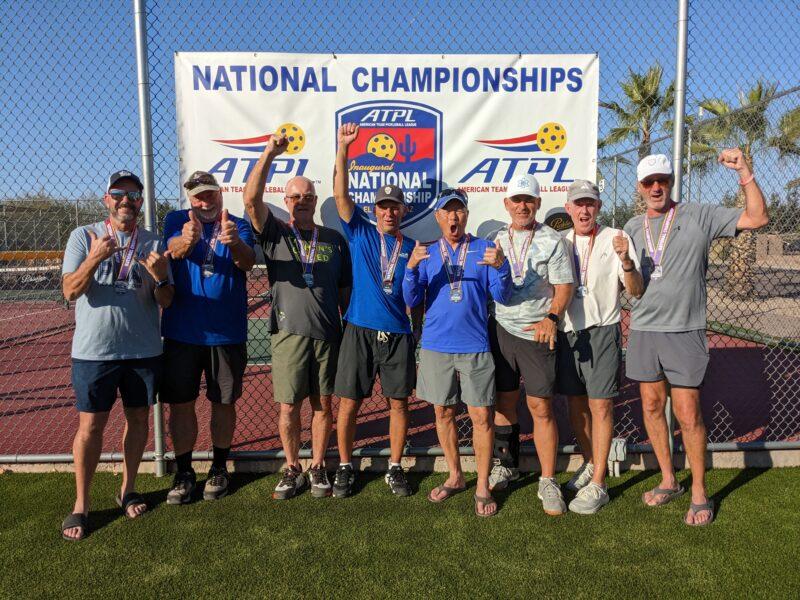
national pickleball
ATPL national pickleball is not an open draw. State champions and qualifying teams from affiliate leagues compete in the same team based pickleball format they play all season.
Read the guideTitle sponsor

Presented By

Silver sponsor

League launches, Nationals updates, and the story of team pickleball as it grows.